

What We Learn by Watching: A Reflection on Observational Learning

Psychology has always been interesting to me because it helps explain why
people act the way they do and how small experiences can shape our thoughts,
feelings, and behaviours. One of the best examples of this is Albert Bandura’s Bobo doll
experiment. When learning more about this study in class, I was shocked to find out
how easily children could pick up such aggressive behaviours simply by observing
others. The idea that we don’t need direct punishment or reward to promote a behaviour
challenged my own assumptions about how people learn. Bandura’s experiment
exposed that observation alone can have a long lasting impact on someone’s
behaviour, and reflecting on this made me consider how much of what I do every day is
influenced by the people and media I encounter. Whether it is a friend, parent, or even a
video game character, models of behaviour surround us constantly whether we are
consciously aware of it or not, shaping us more than we often realize.
In the original Bobo doll experiment, Bandura along with his collogues in 1961,
exposed children to adults who were either behaving aggressively or non-aggressively
toward an inflatable doll. Some adults were hitting, kicking, and shouting towards the
doll while others engaged with it calmy. The children were given the chance to interact
with the doll themselves. Researchers observed that the children who were exposed to
the aggressive adults were more likely to copy the same aggressive actions even
without any reward or punishment available. This study helped me understand the
power of modeling. Seeing an action performed by another person particularly someone
you look up to can make it feel like a normal or acceptable way to behave.
Reflecting on my own life, I realized that I often imitate others that I admire without consciously
thinking about it. Whether it was how my parents dealt with frustration or how a popular
online figure expressed their emotions, I saw that modeling isn’t limited to aggression
and that it extends to all facets of life.
The experiment also allowed me to think about the ethical side of psychology as
well. Children in this study were surrounded and showed aggressive actions without a
clear follow up to address any possible negative side effects it may have caused them.
This made me consider how in modern life we are constantly exposed to potentially
harmful behaviour and actions through social media and games. For example, violent
video games or any sort of online content can display aggressive or gory behaviours
repeatably. The American Psychology Association (APA) 2020 review showed that
violent video games are strongly linked to increased aggressive thoughts, feelings, and
behaviours, especially in children and adolescents. Even though the effects may be
small, repeated exposure does matter particularly in combination with other influences
such as family, peers, and environment. Reading about this has helped me reflect on
my own media intake and consider how the content I watch could be shaping my
attitudes or reactions without even realizing it’s changing me.
To fully understand observational learning, we need to look at the four main
elements, which are attention, retention, reproduction, and motivation. Kendra Cherry in
2025 explains that attention requires noticing the behaviour, retention involves
remembering it, reproduction involves the ability to perform it, and motivation
determines whether the behaviour will be enacted. From my ow reflection, I realized that
my attention is often captured by behaviours that feel rewarding or socially acceptable.
For example, watching a friend speak in front of a large crowd confidently or my
favourite influencer create engaging content often motivates me to try similar actions,
even though I had no conscious intention to imitate it. Retention is also something I can
relate to directly by seeing a behaviour repeatedly, it tends to stick in my mind and It
becomes more likely to appear in my own actions. This made me think about the sheer
amount of modeling we are exposed to in our daily lives and how our brains are
constantly tracking and storing behaviours, even those that we think we might dismiss
as insignificant and non-meaningful.
Bandura’s theory also highlights the importance of the model and the
environment. Saul McLeod in 2025 explains that we are most likely to be influenced by
models we perceive as competent, similar to ourselves, or socially admired. This has
helped me reflect on why people start to mimic or pick up certain mannerisms from their
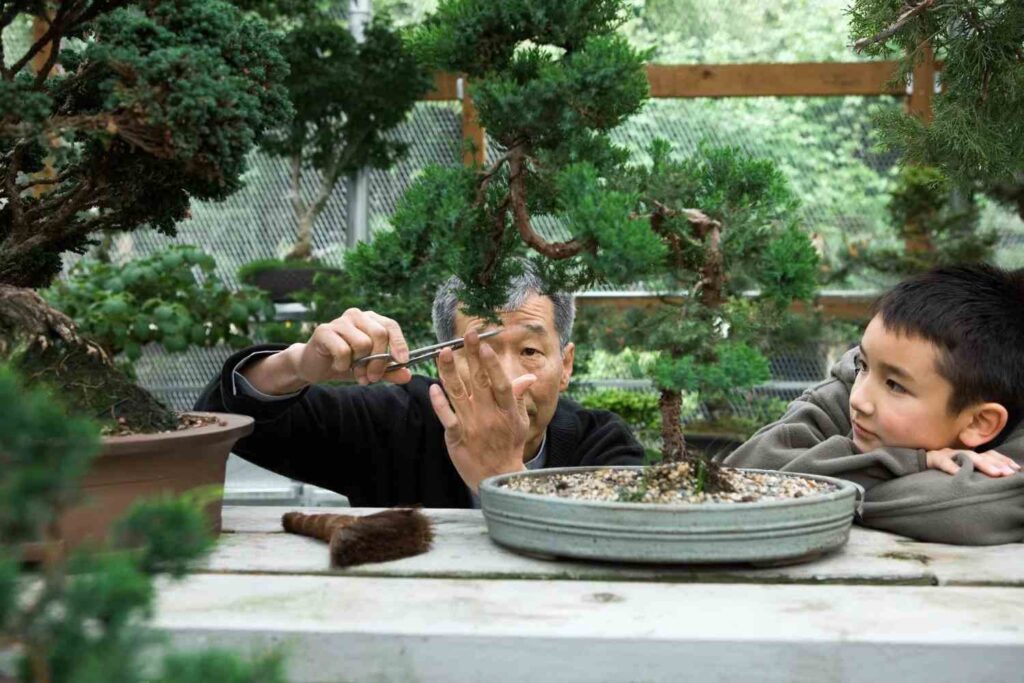
loved ones without even noticing. When I see someone I look up to act a certain way
whether it’s a friend handling stress calmly or an online influencer demonstrating
confidence I feel more likely to copy those behaviours. The environment also places a
huge role, just as the children in the Bobo doll experiment were influenced by a
controlling setting, I am influenced by my surroundings just like everyone else is, from
family dynamics to school culture to online communities we surround ourselves with.
These contexts shape which behaviours are noticed, remembered, and ultimately
recreated. Being able to recognize this has allowed me to be more conscious of the
people and the media I choose to surround myself with, knowing that I am retaining
more than I previously thought.
Social media in particular highlights the strength of observational learning in a
modern context, The APA’s 2023 advisory on adolescent social media use noted that
while online platforms does offer connection and self-expression, excessive amounts of
use is linked to increased anxiety, depression, and disrupted sleep. Look past these
effects, I reflected on how social media exposes us to constant modeling both positive
and negative behaviours, trending challenges, viral content, and popular influencers
habits all act as a model for behaviour, shaping our attitudes, social norms, and in some
cases self-perception. I have found this interesting because it mirrors the same
mechanisms Bandura observed in the lab, but on a big and more continuous scale.
Just as the Bobo doll experiment showed imitation in a controlled environment, online
plate forms allow for behaviours to be modeled repeatedly to millions of people across
the world, often without any feedback or reinforcement.
Reflecting on this has allowed me to be more aware of how observational
learning influences not only aggressive acts but emotional regulation and identity
formation. When coming across certain behaviours online, from expressions of
confidence to displays of empathy and how it can influence how we handle our own
personal emotions or how we approach social interactions. On the flip side observing
aggressive behaviour can normalize anger or conflict as an acceptable response. After
becoming more educated on the subject I thought about my own ()reactions to online
content. I found that when I would watch people respond to challenges or adversity
calmly I would often feel more likely to face my own problems similarly to the way they
did. however repeated exposure to negativity or hostility can make you handle situations
in certain ways that you might not have in the past. Observational learning isn’t just
about copying actions, it also shapes how we act, think, feel, and approach situations in
our daily lives.
Thinking about Bandura’s experiment has can also help someone reflect on their
childhood experiences and how much they learned through observation without even
realizing it. The simplest of daily interactions like how other people handle
disagreements or how your parents treat others, help provide models of behaviour that
can carry into your adulthood. Observational learning is so ingrained into people that it
can sometimes happen unconsciously, even though its effects are long last. This helped
me realize that creating favorable environments for myself, whether it was at school,
home, or online It can be important for encouraging behaviours that we want to see in
ourselves and others. Just as children in the Bobo doll experiment were influenced by
adult models, we are constantly being influenced by the people that surround us and the
media we choose to consume.
In a more modern outlook, video games and social media reinforces that
Bandura’s findings are not only limited to aggression or childhood behaviour but can
also be applied in many different situations like video games. Games that promote
teamwork, cooperation, or problem solving can encourage positive social behaviours
through repeated observation and exposure. In a similar context, online communities
that emphasize kindness, empathy, and creativity can serve as a valuable model for
learning. Therefore observational learning is not inherently negative, it simply reflects
who we surround ourselves with and the behaviours that are presented to us because
of that choice. Knowing this can help people purposefully choose positive models to
shape their own behaviour, from seeking the right mentors to choosing online creators
who encourage kindness, personal growth, and positive habits.
In lots of ways, reflecting on Bandura’s work can be a personal exercise in self-
awareness. It can show people that they are continually absorbing new behaviours,
attitudes, and social norms from their environment, both online and offline. Knowing all
of this can help to become more mindful of how you respond to observed behaviours,
choosing to adopt those that align with your values and dismissing those that don’t. This
reflection can also extend beyond the individual. Understanding observation learning
helps show the responsibility we have as role models, whether as parents, teachers, or
peers. Every little action we perform has the potential to influence others, showing the
powerfulness of bandura’s findings.
Ultimately, the Bobo doll experiment continues to be extremely relevant because
of how easily behaviour can be learned through observing, and how this not only affects
aggression but emotional well-being, social identity, and decision making. Whether its
children in a lab to adolescents navigating digital landscapes, the principles of attention,
retention, reproduction, and motivation are constantly at work. Thinking about these
ideas has helped me recognize that being aware is crucial for breaking cycles of
imitation that may be harmful while also reinforcing the positive behaviours. Whether it’s
in a classroom, work, or online observing and modeling behaviours remain important to
learning and growth. Bandura’s research is more than an experiment, it’s a mirror for
understanding how humans can interact, connect, influence, and shape one another.
Furthermore, reflecting on Bandura’s Bobo dol experiment has helped grow my
understanding of observational learning and the relevance it has in today’s world.
His study shows the importance that behaviour is learned not just by rewards and
punishment but also by watching others, absorbing actions, and understanding social
cues. On a modern scale, video games and social media demonstrates that these
principles operate in new environments and are able to reach people on larger scale
unlike before media. Personally, reflecting on observational learning has helped
encourage me to be more mindful of the models that I choose to surround myself with
and the behaviours I decide to demonstrate. Bandura’s work has been a powerful
reminder that people are social learners by nature and that the environments we choose
to create and participate in have a lasting impact on ourselves and others. By being
able to acknowledge the continuous influence of observation and imitation, we can
encourage healthier behaviours, positive social norms, and more intentional interactions
both online and offline.
References
American Psychological Association. “Violent Video Games and Interactive Media:
Effects on Behavior.” APA, 9
Mar.2020, www.apa.org/news/press/releases/2020/03/violent-video-games-behavior
Cherry, Kendra. “How Observational Learning Affects Behavior.” Verywell Mind, 27 Jan.
2025, www.verywellmind.com/what-is-observational-learning-2795402.
American Psychological Association. “Health Advisory on Adolescent Social Media
Use.” APA, 9 May 2023, www.apa.org/topics/social-media-internet/health-advisory-
adolescent-social-media-use. Accessed 16 Oct. 2025.
McLeod, Saul. “Albert Bandura’s Social Learning Theory.” Simply Psychology, 16 Oct.
2025, www.simplypsychology.org/bandura.html.


Responses